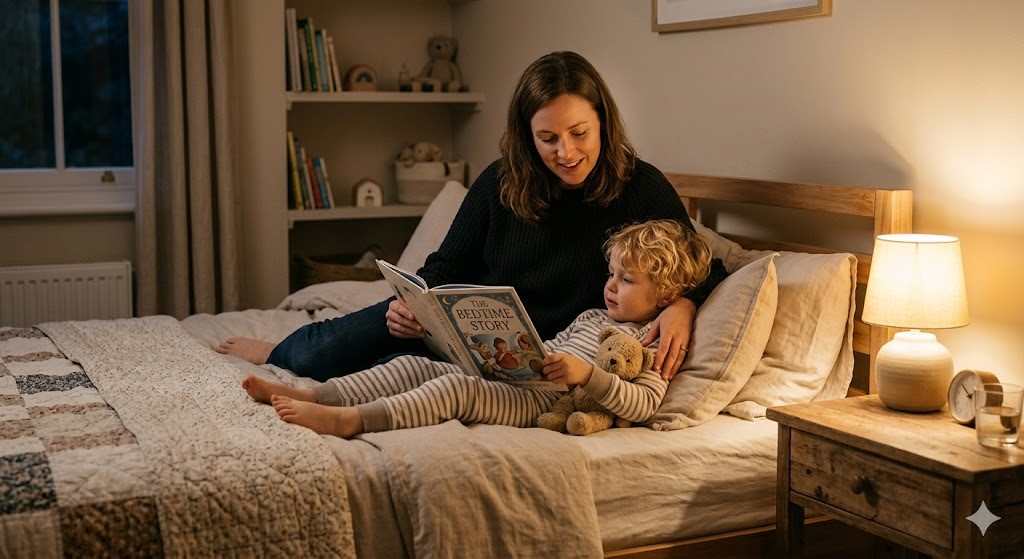
If your child resists bedtime every night, you are not alone. Many parents find that evenings turn into a struggle, with delays, protests, and repeated trips out of bed.
What should be a calm end to the day often becomes frustrating for both you and your child.
The good news is that this is very common. In most cases, bedtime resistance is not about bad behavior. It is about how children experience transitions, emotions, and routines.
Why Bedtime Feels So Hard for Kids
Before looking at solutions, it helps to understand what is actually happening.
For young children, bedtime means:
👉 separation from parents
👉 loss of control
👉 moving from activity to stillness
This can feel overwhelming.
Children do not resist sleep itself. They resist what sleep represents.
When a child says “I am not tired” or “just one more thing,” they are often trying to delay that transition.
👉 See bedtime books that help kids fall asleep easier
What Happens When Bedtime Becomes a Struggle
When bedtime is inconsistent or stressful, a few patterns often appear:
- Falling asleep takes a long time
- Children leave their bed repeatedly
- Bedtime turns into negotiation
- Parents feel exhausted and frustrated
Over time, this can create a negative association with bedtime.
Instead of feeling safe and calm, the child expects tension and resistance.
What Actually Helps Children Settle at Night
The key to better bedtimes is not strict rules or longer routines. It is consistency and emotional safety.
Children respond best when bedtime includes:
- A clear and predictable routine
- A calm environment with low stimulation
- Repetition that signals what comes next
- A sense of connection before sleep
When these elements are in place, bedtime becomes easier because it feels familiar and safe.
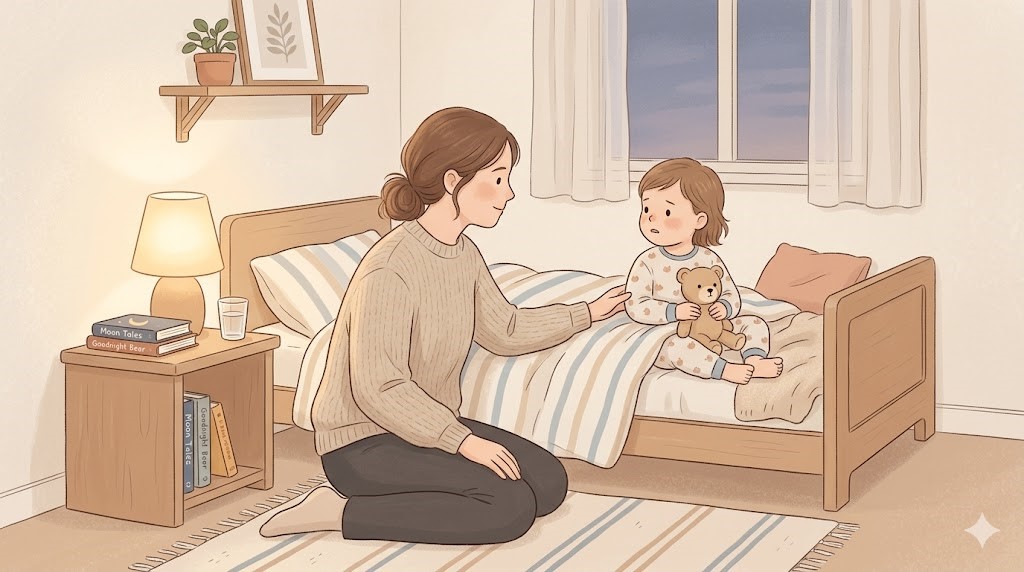
Why Books Make a Big Difference at Bedtime
One of the most effective tools in a bedtime routine is reading.
Reading helps because it:
- Slows the pace of the evening
- Creates a moment of connection
- Signals that sleep is coming next
- Gives children something predictable to focus on
Stories also help children process emotions. Many bedtime books are designed to gently guide children from activity into rest.
This makes them especially powerful during the transition to sleep.
The Difference Between Random and Structured Bedtime Routines
Many parents try different things each night depending on how tired they feel or how the evening has gone.
While this is understandable, it often makes bedtime harder.
Children benefit from routines that feel the same every night.
For example:
- Bath
- Pajamas
- One or two books
- Lights out
When the sequence stays the same, children begin to anticipate sleep rather than resist it.
A Simple Way to Improve Bedtime Starting Tonight
You do not need a long or complicated routine.
What matters most is:
- keeping the routine consistent
- choosing calming activities
- ending with connection
Even ten to fifteen minutes of focused, calm time can change how your child experiences bedtime.
Where to Start
If you want a simple way to create a more peaceful bedtime, start with one small change.
Introduce a short reading moment at the same time each evening.
Choose books that are calm, predictable, and designed for bedtime.
👉 See bedtime books that help kids fall asleep easier
Final Thoughts
Bedtime resistance is not something you have to fight against.
When you understand why it happens, it becomes easier to respond in a way that supports your child instead of creating more tension.
With the right structure and simple tools, bedtime can shift from stressful to calm.
And often, the smallest changes make the biggest difference.
Check out theese two books
Goodnight, Goodnight, Construction Site
Affiliate Disclaimer
This post contains affiliate links. As an Amazon Associate, I may earn a small commission at no extra cost to you.