By Kids Books & Learning Blog / June 2026
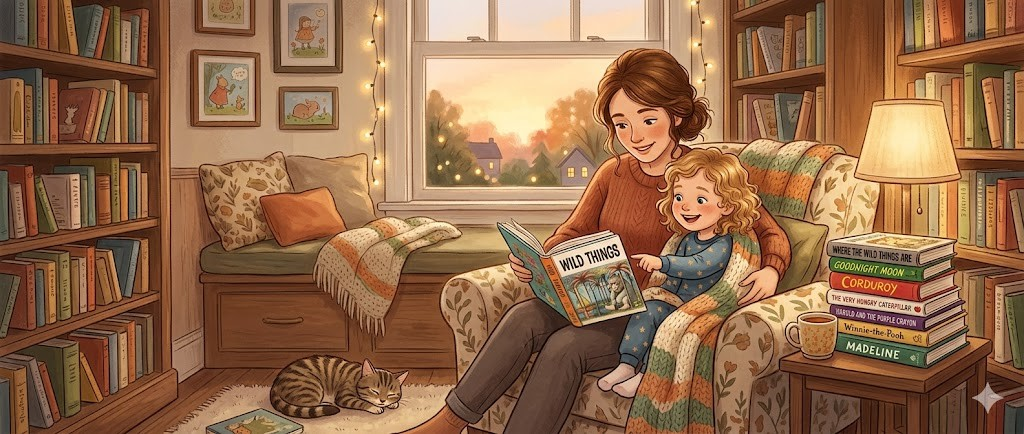
There are so many new children’s books today that it can be easy to wonder if classic children’s books still matter.
New books can be wonderful. They often have modern illustrations, fresh topics, and characters that feel close to children’s everyday lives. But classic picture books still have a special place on a child’s bookshelf.
Many classic children’s books have stayed popular for a reason.
They are easy to read aloud. They are simple enough for young children to follow. They often use repetition, rhythm, humor, strong pictures, or familiar routines. Most importantly, children often want to hear them again and again.
That repeated reading is not a problem.
It is one of the reasons classic books can be so helpful.
When a child asks for the same story every night, they are not just being difficult or refusing variety. They may be learning the words, noticing the pictures, predicting what comes next, and building a sense that books are familiar and enjoyable.
Classic books are not only about nostalgia for parents. They can support language, attention, memory, emotional connection, and early reading habits in a very natural way.
Why Children Return to the Same Books Again and Again
Many parents notice that young children want the same books over and over.
This can feel repetitive for adults, but for children, repetition is comforting.
A familiar book gives the child a sense of control. They know what is coming. They can join in. They can point to the same picture, say the same phrase, or laugh at the same funny moment.
This is one reason classic children’s books often work so well.
Many of them are built around patterns children can understand.
A caterpillar eats through different foods. A mouse asks for one thing after another. A rhyming story moves with a playful rhythm. A familiar character appears in a story that feels safe and predictable.
Children enjoy that structure.
They are not only listening to a story. They are learning how stories work.
They begin to understand that stories have a beginning, middle, and end. They learn that one event can lead to another. They notice repeated phrases and familiar sounds. They start to remember details and predict what might happen next.
That is valuable early literacy practice, even before a child can read words independently.
Repetition Helps Children Understand Stories
Adults often want to move on to a new book quickly.
Children often want to stay with the book they already know.
That repeated reading can help children understand stories more deeply. The first time a child hears a book, they may mostly notice the pictures. The second time, they may begin to understand the plot. The third time, they may remember what happens next.
Over time, they may begin to participate.
They might finish a sentence. They might point to a character. They might say, “He is going to ask for milk,” or “The caterpillar is still hungry.”
This kind of participation matters.
It shows that the child is listening, remembering, and making meaning.
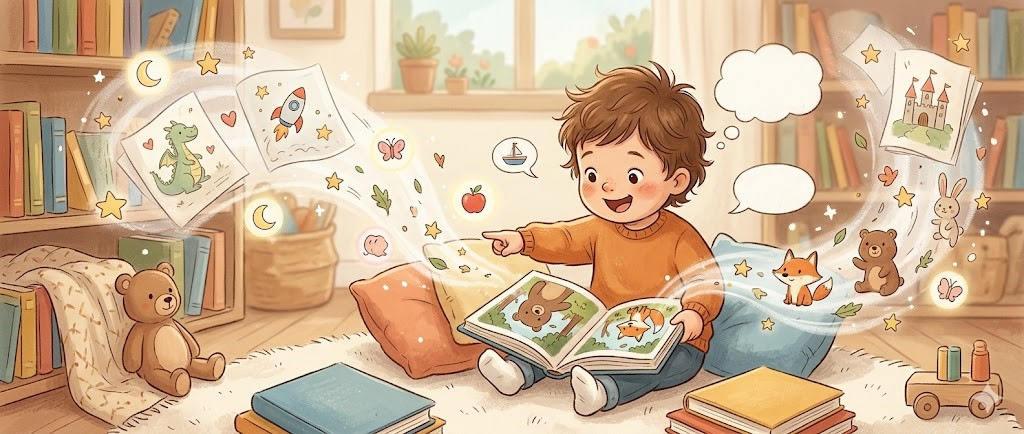
Classic books often make this easier because they are usually clear and memorable. The language is not always complicated. The story structure is often strong. The pictures help children follow what is happening.
A book does not need to be difficult to be useful.
In fact, for young children, simple and repeatable books are often better.
Classic Picture Books Build Language Naturally
One of the strongest reasons to read classic children’s books is that they expose children to language in a relaxed and enjoyable way.
Children learn many words through conversation, but books add something different.
Books often include words, phrases, and sentence patterns that children might not hear in everyday speech. They also help children connect language with pictures, actions, feelings, and story events.
Classic picture books can be especially helpful because many of them are designed to be read aloud.
Some have rhythm and rhyme. Some use repeated phrases. Some use funny cause and effect. Some use simple but memorable descriptions.
When a parent reads aloud, the child hears:
new words
sentence rhythm
story language
expression
questions and answers
repeated patterns
the connection between words and meaning
This does not need to feel like a lesson.
A child sitting close to a parent and listening to a favorite book is already learning.
That is one of the best things about reading at home. It can be calm, warm, and educational at the same time.
Classic Books Can Support Conversation
A good children’s book gives parents something to talk about.
You do not need to turn reading into a quiz. But small comments and simple questions can help children think about the story.
You might ask:
“What do you think will happen next?”
“Why do you think he did that?”
“Can you find the caterpillar?”
“Which picture do you like best?”
“Have you ever felt like that?”
Classic books often work well for this because they are easy to return to. Children can notice something new each time.
One day, they may focus on the pictures. Another day, they may notice the food, the animals, the silly sequence, or the ending. Over time, familiar books can become shared family language.
A child might quote the book during the day. A parent might refer to the story during a routine. The book becomes part of the home.
That is powerful.
Reading is not only about finishing a book. It is also about building a relationship with books.
Classic Books Can Help Build a Home Reading Habit
For many families, classic children’s books become part of a routine.
They may be used before bed, after preschool, during quiet time, or on weekend mornings. Because the stories are familiar, they can be easier to reach for when everyone is tired.
This matters because reading habits are built through small repeated moments.
You do not need a perfect reading setup. You do not need long lessons. You do not need to read ten books every night.
A few minutes with a good book can still matter.
Classic books are useful because many of them work well in real family life. They are often short enough to read in one sitting. They are enjoyable enough to reread. They are familiar enough that children can relax into them.
That makes them helpful for building consistency.
A reading habit does not start when a child reads independently. It starts when books become a normal and enjoyable part of the day.
Different Classic Books Help in Different Ways
Not every classic children’s book does the same thing.
Some are best for toddlers. Some are better for preschoolers. Some work well for early readers. Some are especially good as gifts or bookshelf staples.
For example, The Very Hungry Caterpillar is often a strong choice for very young children because it is colorful, simple, and easy to follow. It can also support early concepts such as counting, food, days of the week, and change.
If You Give a Mouse a Cookie is a good example of a funny circular story. It helps children follow cause and effect because one event leads to another and another. Children often enjoy predicting what the mouse will ask for next.
Dr. Seuss books are often known for playful language, rhyme, and rhythm. They can make reading aloud feel energetic and fun, especially for children who enjoy silly words and sound patterns.
Disney Little Golden Books can work well for families who want familiar characters and a ready made set of stories. Character familiarity can help some children feel excited to open a book.
The best choice depends on your child.
Some children love silly stories. Some love animals. Some love rhyming language. Some are drawn to characters they already know. Some need short, calming books. Others enjoy books that are funny and lively.
The goal is not to choose the most impressive book.
The goal is to choose books your child will actually want to hear again.
How to Read Classic Books With Young Children
Classic books work best when reading feels calm and connected.
You do not need to read the book perfectly. You do not need to explain every page. You do not need to ask questions after every sentence.
Try to make reading feel natural.
You can:
let your child choose the book
read slowly
pause at favorite pictures
use expression
let your child turn the pages
reread favorite parts
talk about what you notice
stop before your child gets restless
If your child wants the same book again, that is fine.
Repeated reading can help children feel confident and involved. They may begin by listening, then pointing, then joining in, then retelling parts of the story themselves.
That progression is meaningful.
It shows that the child is becoming more active in the reading experience.
What to Look for When Choosing Classic Children’s Books
When choosing classic children’s books for your home, think about how the book will actually be used.
A beautiful book is nice, but the best book is one that fits your child and your routine.
Look for books that are:
age appropriate
easy to read aloud
visually engaging
short enough for your child’s attention span
interesting enough to reread
strong in rhythm, repetition, humor, or story structure
good for conversation
enjoyable for both parent and child
For toddlers, sturdy board books can be helpful.
For preschoolers, picture books with repeated story patterns often work well.
For early elementary children, funny stories, rhyming books, and familiar character collections can keep reading enjoyable.
If you are buying a gift, boxed sets can be a strong choice because they help families build a small library quickly.
👉 See our favorite classic children’s books for young readers here.
Why Classic Does Not Mean Outdated
Some parents worry that classic books may feel old fashioned.
Some do. Not every classic book is the right fit for every family.
But many classic children’s books continue to work because they focus on things young children still love: animals, food, humor, bedtime, imagination, repetition, and familiar routines.
Children do not usually care whether a book is new or old.
They care whether the book feels interesting, funny, comforting, or enjoyable.
That is why many classic books still earn a place in modern homes.
A good classic book does not need to replace newer books. It can sit beside them. A child’s bookshelf can include both modern stories and older favorites.
The combination can be strong.
New books can bring fresh voices and current topics. Classic books can bring familiar rhythms, shared cultural references, and stories that have already worked for many children across generations.
Final Thoughts
Classic children’s books still matter because they help make reading feel familiar, enjoyable, and repeatable.
They are not valuable only because adults remember them from childhood. They are valuable because many of them are built in ways that naturally support young children.
They use repetition. They invite participation. They build language. They create routines. They give children stories they can return to again and again.
If you want to build a home library, classic picture books are a strong place to start.
Choose books that fit your child’s age, interests, and attention span. Read them slowly. Let your child return to favorites. Do not worry if the same book appears night after night.
That repetition may be doing more than you think.
With the right books, reading can become more than an activity.
It can become a calm, familiar, and meaningful part of childhood.
👉 See our favorite classic children’s books every kid should read here.
Affiliate Disclaimer
This post contains affiliate links. As an Amazon Associate, I may earn a small commission at no extra cost to you.