
If your child has big feelings, gets angry quickly, or struggles to calm down after frustration, the right books can help more than you might think.
Many children feel emotions very strongly, but they do not always have the words to explain what is happening inside. That can lead to crying, yelling, stomping, refusing, arguing, or shutting down.
For parents, that can make everyday moments feel much harder. A small problem can suddenly turn into a big emotional reaction.
The good news is that books can be a simple and gentle tool for helping children understand emotions.
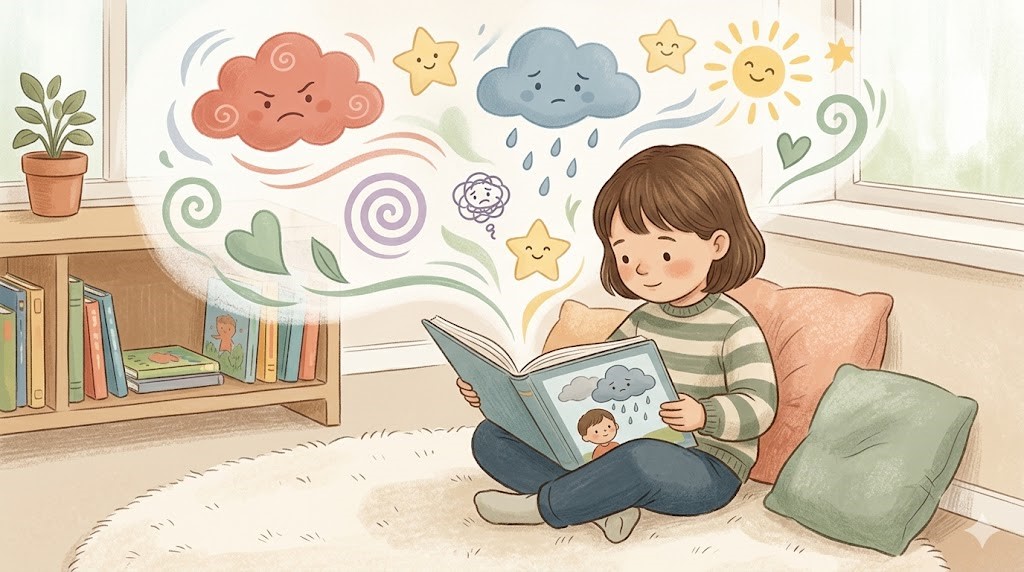
A good story helps children see feelings in a way that feels safe. Instead of talking directly about their own anger or frustration right away, they can first watch a character experience those feelings. That often makes it easier for children to recognize emotions, talk about them, and feel less alone.
In this guide, we look at three excellent books that can support children with big feelings, anger, frustration, and emotional understanding at home.
If you want a deeper look at why stories help with emotional development, you can also read Why Kids Have Big Feelings and How Books Can Help.
See our favorite kids books about big feelings and anger here
What Makes a Good Book About Big Feelings?
Not every children’s book about emotions works in the same way.
Some books help children name feelings clearly. Others help children feel understood through humor, imagination, or strong visual storytelling. The best books usually do both.
A good emotions book should help children:
- recognize feelings
- understand that feelings are normal
- feel safe talking about emotions
- see that big feelings can pass
- learn that emotions do not make them bad
It also helps when a book is enjoyable enough to read again and again. Repetition matters. Children often connect more deeply with emotion books when they return to them during calm moments.
The three books below each support emotional development in a different way. That is what makes this group such a strong cluster for parents.
1. Grumpy Monkey
Grumpy Monkey is a wonderful book for children who wake up grumpy, get frustrated easily, or feel upset without knowing exactly why.
The story follows Jim Panzee, who is clearly in a bad mood. The animals around him keep trying to fix it, explain it, or tell him how he should feel. But Jim is still grumpy.
That is exactly why this book works so well.
Many children do not want to be rushed out of a feeling. When they are upset, they do not always need advice right away. Sometimes they first need to feel understood.
This book gives children permission to have a mood. It helps them see that it is okay to feel grumpy sometimes, and that not every emotion needs to be solved immediately.
It is also funny, which makes it easier to revisit. Humor lowers resistance. Children often connect well with Jim because his mood feels real and relatable.
Why it works
- It helps children recognize grumpiness and frustration
- It shows that feelings do not always have a simple explanation
- It uses humor to make emotional conversations easier
- It gives parents a natural opening to talk about mood
- It helps children feel understood instead of corrected
Best for
This book is best for children who often seem moody, irritable, frustrated, or emotionally sensitive.
Good choice if your child
- gets grumpy for no obvious reason
- resists being told to calm down
- becomes frustrated quickly
- needs help feeling understood
2. Where the Wild Things Are
Where the Wild Things Are is a classic choice for children with intense emotions, wild behavior, and strong reactions to limits.
The story follows Max, who becomes wild and is sent to his room. From there, he enters an imaginative world filled with the Wild Things. The story captures the feeling of anger and emotional intensity in a powerful and memorable way.
This book is less direct than some emotions books, but that is part of its strength.
Instead of naming feelings in a simple teaching style, it shows what anger and emotional chaos can feel like. The Wild Things become a visual expression of powerful inner emotions.
That makes this book especially helpful for children who experience anger as something huge and hard to manage.
It also matters that the story returns to emotional safety. Max comes back home. That return offers reassurance. Big feelings can happen, but connection and comfort still remain.
Why it works
- It turns anger and wild emotions into something children can imagine and understand
- It helps children see strong feelings without shame
- It supports conversations about behavior and emotional repair
- It gives parents a story that feels emotional without being preachy
- It is memorable and visually powerful
Best for
This book is best for children who have intense emotions, strong anger, wild energy, or frequent power struggles.
Good choice if your child
- has big reactions when told no
- gets wild when upset
- struggles with emotional intensity
- loves imaginative stories
👉 See Where the Wild Things Are here
3. The Color Monster
The Color Monster is an excellent book for helping children identify and sort feelings.
It uses color to represent different emotions, which makes emotional language easier for young children to understand. Instead of feelings being vague or confusing, each emotion becomes something visible and concrete.
This is especially useful for children who feel a lot all at once.
Some children do not just feel angry or sad. They feel mixed up. They may feel upset, confused, tired, overwhelmed, and frustrated at the same time. This book helps break those feelings apart in a gentle and child friendly way.
Parents often love this book because it gives them easy language to use at home. It becomes much easier to ask a child how they feel when emotions are connected to colors and simple visual ideas.
Why it works
- It helps children name emotions clearly
- It makes feelings easier to understand through color
- It works especially well for younger children
- It gives parents simple emotional language to use
- It supports self awareness and calm conversation
Best for
This book is best for children who need help naming feelings, understanding emotions, or making sense of mixed emotions.
Good choice if your child
- struggles to explain feelings
- becomes overwhelmed easily
- is still learning emotional vocabulary
- responds well to visual learning
Which Book Should You Choose?
All three books are strong choices, but they help in different ways.
If your child often seems grumpy, moody, or frustrated, Grumpy Monkey is the most relatable place to start. It helps children feel seen and understood without pressure.
If your child tends to have intense angry reactions or very wild emotional moments, Where the Wild Things Are may be the strongest fit. It captures emotional intensity in a way that children can really feel.
👉 Find Where the Wild Things Are here
If your child needs help understanding, naming, and sorting emotions, The Color Monster is probably the easiest and most practical starting point. It gives children a simple framework for talking about feelings.
Some families may benefit from more than one of these books.
A very good combination is:
- The Color Monster for naming and sorting feelings
- Grumpy Monkey for everyday frustration and bad moods
- Where the Wild Things Are for anger and emotional intensity
Together, these books cover emotional vocabulary, mood, anger, and emotional processing in a very balanced way.
Best Overall Choice
If you want one book that feels especially practical for everyday use, The Color Monster is a great starting point.
It is easy for young children to understand, visually engaging, and very helpful for building emotional vocabulary at home.
👉 Check The Color Monster here
Best for Anger and Wild Reactions
If your child’s biggest challenge is anger, intensity, or emotional outbursts, Where the Wild Things Are is a powerful choice.
It helps children connect with strong emotions through imagination and gives parents a meaningful story to return to.
👉 Check Where the Wild Things Are here
Best for Mood and Frustration
If your child often seems cranky, frustrated, or simply in a bad mood, Grumpy Monkey may be the most relatable option.
It helps children understand that feelings do not need to be hidden and that being grumpy sometimes is part of being human.
How to Use These Books at Home
These books work best when they are read during calm moments, not only in the middle of a meltdown.
When children are calm, they can absorb the story, connect with the character, and begin to build emotional understanding. Then later, when a difficult moment happens, you can gently refer back to the book.
For example, you might say:
“Your feelings seem a little mixed up right now, like The Color Monster.”
Or:
“This feels like a Grumpy Monkey kind of day.”
Or:
“Those feelings got really wild for a moment.”
That kind of connection can help a child feel understood instead of judged.
These books are also great to keep in a reading basket, bedtime stack, or calm corner so your child can return to them often.
Final Thoughts
Big feelings are a normal part of childhood, but they can be difficult for both children and parents.
The right books can make those feelings easier to understand. They help children see emotions more clearly, give parents language to use, and turn difficult moments into opportunities for connection.
Grumpy Monkey is a great choice for frustration and bad moods.
Where the Wild Things Are is a powerful story for anger and emotional intensity.
The Color Monster is ideal for helping children name and sort feelings.
If you want simple, helpful books that support emotional growth at home, these are three excellent places to start.
Affiliate Disclaimer
This post contains affiliate links. As an Amazon Associate, I may earn a small commission at no extra cost to you.
Pingback: Why Kids Have Big Feelings and How Books Can Help – Kids Books & Learning Blog