This post contains affiliate links.
If your child knows letter sounds but still struggles to read simple words, the right beginner reading books can make a big difference.
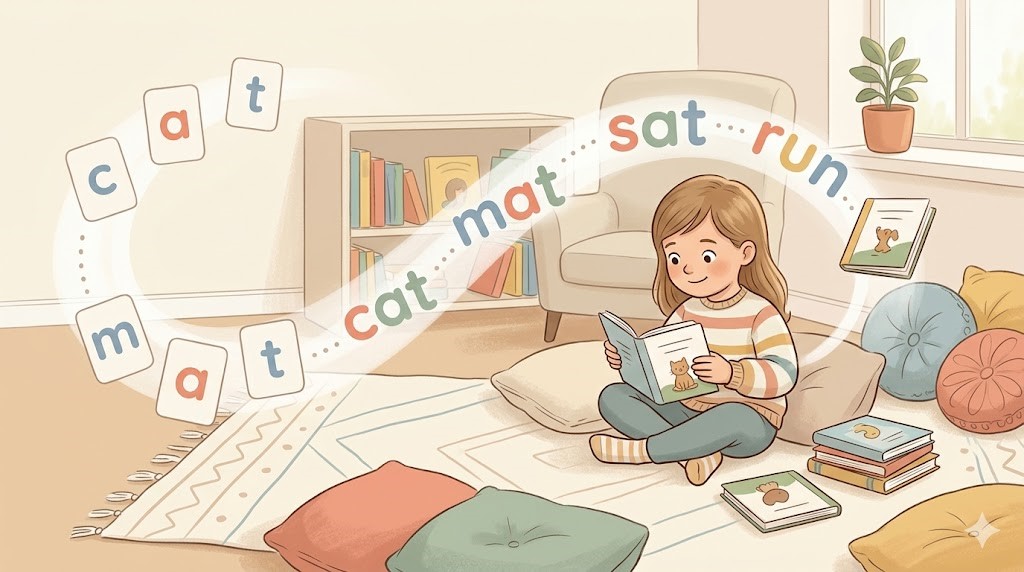
Many children can say individual letter sounds, but still find it hard to blend those sounds together into words. They may know the sounds in cat, run, or sat, but when the letters appear together, they freeze, guess, or lose confidence.
This stage is very common.
Children do not move from letter sounds to reading overnight. They need simple practice, short words, clear patterns, and books that match what they are ready to decode.
If you want to understand this stage more deeply, you can read our guide here:
👉 Why Your Child Knows Letter Sounds But Still Cannot Read Words
Below are three helpful beginner reading resources for children who are learning to blend sounds and move toward independent reading.
👉 See Bob Books Set 1 here
👉 See Nonsense Reading Fluency here
👉 See Charge into Reading Decodable Books Stage 1 here
What to Look for in Beginner Reading Books
When children are learning to blend sounds, the best reading books are usually simple, structured, and easy to follow.
At this stage, books should not be too advanced. If there are too many difficult words, children may start guessing instead of reading.
Look for beginner reading books that include:
- simple short vowel words
- words children can sound out
- very simple sentences
- limited sight words
- gradual progression
- repetition to build confidence
- short books that feel achievable
The goal is not to impress the child with difficult books.
The goal is to help the child feel:
“I can read this.”
That feeling is important. Early reading confidence often grows when children can finish a simple book or read a short word by themselves.
1. Bob Books Set 1
Bob Books Set 1 is one of the strongest choices for children who are ready to begin reading their first simple books.
This set is designed for children who are just learning letter sounds and beginning to sound out short words. The books use simple two and three letter words with short vowels. New sounds are added gradually, so children are not asked to read too much too soon.
That gradual structure is what makes Bob Books especially helpful.
A child can start with very simple text and slowly build confidence. The books are short enough to feel manageable, which can make a big difference for a beginning reader.
For many children, reading one whole small book feels like a major win.
Why it works
- It uses simple decodable text
- It includes short vowel words children can sound out
- It introduces new letter sounds gradually
- It keeps sentences very simple
- It helps children feel proud of reading a whole book
- It includes a parent guide with tips
Best for
Bob Books Set 1 is best for children who are ready to try their first real beginner reading books.
It is a good choice if your child:
- knows some letter sounds
- can blend a few simple words
- needs short books that feel achievable
- gets excited by reading a whole book
- benefits from gradual progression
2. Charge into Reading Decodable Books Stage 1
Charge into Reading Decodable Books Stage 1 is a strong choice for children who need more structured short vowel reading practice.
This set focuses on short vowel decodable readers. Each book focuses on one short vowel sound, which helps children practice reading in a clear and controlled way.
That makes it useful for children who know letter sounds and are ready to begin decoding longer simple books than the very first beginner books.
The set includes five short vowel books, with stories built around sounds such as short a, short e, short i, short o, and short u. This gives children repeated practice with the exact kind of words they need at this stage.
It also includes literacy activities, which can help parents extend the practice beyond just reading the story.
Why it works
- It focuses on short vowel decoding
- It gives children practice with one vowel sound at a time
- It uses decodable stories with a clear structure
- It supports children who are ready for slightly more reading stamina
- It includes activities for extra practice
- It helps bridge phonics practice and real reading
Best for
Charge into Reading Decodable Books Stage 1 is best for children who already know many letter sounds and need structured practice blending short vowel words.
It is a good choice if your child:
- can blend some short words
- needs more short vowel practice
- is ready for simple decodable stories
- needs repetition with clear sound patterns
- benefits from a structured reading sequence
👉 See Charge into Reading Decodable Books Stage 1 here
3. Nonsense Reading Fluency
Nonsense Reading Fluency is a different type of reading resource. Instead of simple storybooks, it gives children practice with nonsense words.
That may sound unusual at first, but nonsense words can be very useful for children who guess instead of decoding.
When children read familiar words, they may rely on memory. When they read books with pictures, they may guess from the image. But with nonsense words, they have to actually use phonics skills.
This can help children practice blending sounds more directly.
This workbook focuses on blends, digraphs, trigraphs, and nonsense word lists. It is more of a practice tool than a cozy storybook, so it works best when a child is ready for focused reading practice.
It can be especially useful for children who need extra support with decoding and fluency.
Why it works
- It helps reduce guessing
- It strengthens sound by sound decoding
- It gives repeated practice with phonics patterns
- It supports fluency practice
- It can help parents see which sound patterns are difficult
- It works well as extra practice alongside beginner books
Best for
Nonsense Reading Fluency is best for children who need more decoding practice and tend to guess words instead of sounding them out.
It is a good choice if your child:
- guesses words from pictures
- relies on memory instead of decoding
- needs extra phonics practice
- is working on blends and digraphs
- benefits from short focused practice sessions
👉 See Nonsense Reading Fluency here
Which One Should You Choose?
All three resources can help with early reading, but they are best for slightly different needs.
If your child is ready to read their first simple books, Bob Books Set 1 is the best place to start. It feels like real reading, but the text is still simple enough for beginners.
If your child needs structured short vowel practice, Charge into Reading Decodable Books Stage 1 is a strong choice. It gives clear practice with one short vowel sound at a time.
👉 Find Charge into Reading Decodable Books Stage 1 here
If your child tends to guess words instead of sounding them out, Nonsense Reading Fluency may be the most useful supplement. It helps children practice decoding without relying on pictures or memory.
👉 Find Nonsense Reading Fluency here
Some families may choose more than one.
A good combination could be:
- Bob Books Set 1 for first independent reading
- Charge into Reading Decodable Books Stage 1 for short vowel decodable practice
- Nonsense Reading Fluency for extra decoding and fluency practice
Together, these resources cover the main steps from blending sounds to reading more independently.
Best Overall Choice
If you want one simple starting point, Bob Books Set 1 is probably the strongest overall choice.
It gives children the feeling of reading real books, while still keeping the text simple and decodable. For many beginning readers, that sense of success is exactly what they need.
Best for Short Vowel Practice
If your child needs more practice with short vowel words, Charge into Reading Decodable Books Stage 1 is a very good fit.
The focused short vowel structure makes it easier for children to practice one sound pattern at a time.
👉 Check Charge into Reading Decodable Books Stage 1 here
Best for Children Who Guess Words
If your child often guesses instead of sounding out words, Nonsense Reading Fluency can be a helpful extra tool.
Because nonsense words cannot be memorized in the same way, children need to use decoding skills to read them.
👉 Check Nonsense Reading Fluency here
How to Use Beginner Reading Books at Home
The best beginner reading books work even better when practice is short and calm.
You do not need long lessons. In fact, long reading sessions can make children tired and frustrated.
Try this simple approach:
- read for five to ten minutes
- start with words your child can sound out
- let your child point to each word
- encourage blending slowly
- praise effort and progress
- stop before frustration builds
It is better for your child to read a small amount successfully than to struggle through a long page.
If your child gets stuck, help them return to the sounds.
You can say:
“Let us look at the first sound.”
Or:
“Can we slide those sounds together?”
Or:
“You are not guessing. You are sounding it out.”
That kind of support helps children understand what reading actually is.
Final Thoughts
Learning to blend sounds is one of the most important steps in early reading.
If your child knows letter sounds but still struggles with words, they may simply need the right kind of practice. Simple beginner books, short vowel readers, and decoding activities can help make reading feel more achievable.
Bob Books Set 1 is a great choice for first independent reading.
Charge into Reading Decodable Books Stage 1 is ideal for structured short vowel practice.
Nonsense Reading Fluency is helpful for children who need extra decoding and fluency practice.
The right resource depends on where your child gets stuck.
But with simple books, short practice sessions, and steady encouragement, your child can begin to move from separate sounds to real reading.
👉 Shop Bob Books Set 1
👉 Shop Charge into Reading Decodable Books Stage 1
👉 Shop Nonsense Reading Fluency
Affiliate Disclaimer
This post contains affiliate links. As an Amazon Associate, I may earn a small commission at no extra cost to you.
Pingback: Why Your Child Knows Letter Sounds But Still Cannot Read Words – Kids Books & Learning Blog