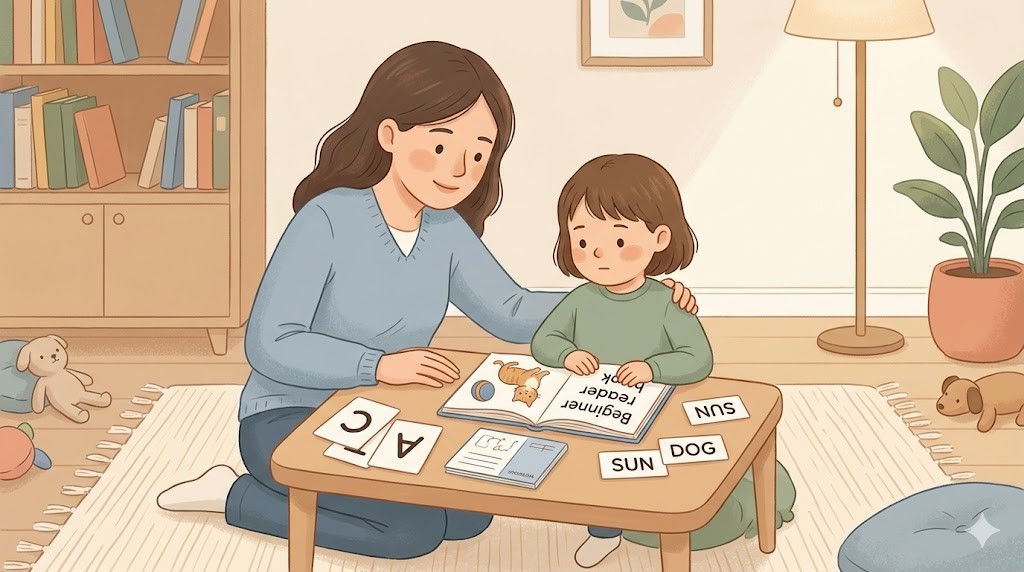
If your child knows many letter sounds but still cannot read simple words, you are not alone.
Many parents reach this point and feel confused. Their child can say that m makes the m sound, a makes the short a sound, and t makes the t sound. But when the letters are placed together as mat, the child still struggles to read the word.
This can feel frustrating for both of you.
You may wonder if your child has forgotten the sounds, if they are not ready to read, or if you are doing something wrong.
The good news is that this is a very common stage in early reading.
Knowing letter sounds is important, but it is only the first step. To read words, children also need to learn how to blend those sounds together. This is the bridge between knowing phonics and actually reading.
Once children begin to understand blending, simple words start to make more sense. Reading becomes less about guessing and more about listening to the sounds in order.
Letter Sounds Are Only the Beginning
Learning letter sounds gives children the building blocks for reading.
But building blocks do not automatically become a house.
A child may know individual sounds but still find it difficult to combine them. This is because reading requires several skills at the same time.
The child needs to:
- recognize each letter
- remember the sound
- say the sounds in the right order
- hold the sounds in memory
- blend them together into a word
- understand that the word has meaning
That is a lot for a beginner reader.
So when a child knows letter sounds but cannot read words yet, it does not always mean they are behind. It often means they are ready for the next step.
That next step is blending.
[Internal link here to your earlier education post]
What Blending Sounds Means
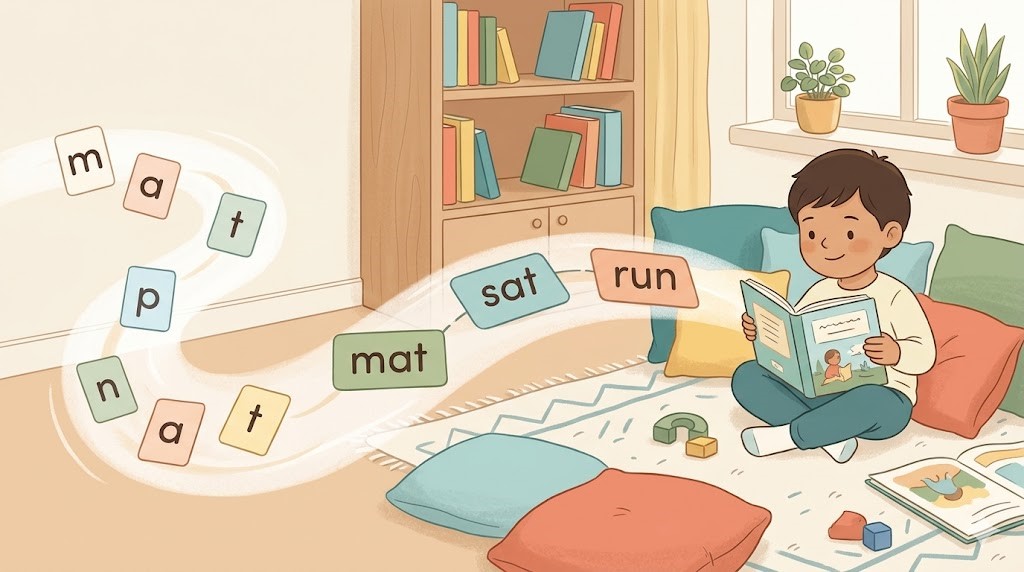
Blending means putting individual sounds together to make a word.
For example:
c
a
t
becomes:
cat
To adults, this feels simple because we do it automatically. But for a child, it can be a completely new skill.
Some children say each sound correctly, but they leave long pauses between the sounds. Others can say the sounds but cannot hear the whole word at the end.
They may say:
c
a
t
and still not recognize that the word is cat.
This is normal.
Blending takes practice because children need to learn how to stretch sounds together and listen for the word that appears.
It helps to practice with very simple words first. Short vowel words such as sat, mat, run, hop, and pen are often easier because they follow predictable sound patterns.
Why Children Guess Words Instead of Reading Them
When blending feels hard, many children start guessing.
They may look at the first letter and say a word that starts with the same sound. They may look at the picture and guess what the word could be. They may memorize a book instead of actually reading the words.
This is common, especially when books are too difficult or have too many words that cannot be sounded out.
Guessing can look like reading at first, but it often creates problems later.
A child may read one familiar book well but struggle with a new page. They may rely on pictures instead of letters. They may become frustrated when the words change.
This is why early reading practice should include books and activities that match the sounds the child has already learned.
When children use decodable books, they are more likely to read by sounding out words instead of guessing.
A decodable book uses words that follow phonics patterns children can understand. This makes reading feel possible and gives children a real sense of progress.
Why Blending Can Feel Hard
Blending is not only a reading skill. It also uses memory, attention, and listening.
A child has to hold the first sound in mind while moving to the second sound, then keep both sounds in mind while adding the third. That can be difficult in the beginning.
Some children also have trouble hearing how separate sounds become one word.
For example, they may hear:
s
u
n
but not immediately hear:
sun
This does not mean they cannot learn. It means they need more practice with simple, consistent examples.
It can help to make the process slower and clearer.
Instead of asking the child to read a full page, start with one short word. Point to each letter. Say the sounds together. Then stretch them smoothly.
For example:
sss aaa t
sat
The goal is not speed at first. The goal is helping the child hear how the sounds connect.
Why Simple Decodable Books Help
Once children begin blending, they need books that let them succeed.
This is where simple decodable books can be very helpful.
A child who is learning short vowel words should not be expected to read books full of long, irregular, or advanced words. That can make reading feel impossible.
Simple decodable books use short words, repeated patterns, and limited new sounds. This gives children a fair chance to read the words themselves.
That matters because confidence is a huge part of early reading.
When a child reads a whole small book, even a very simple one, it can feel like a major achievement. They begin to think:
“I can read.”
That feeling is powerful.
The right beginner books help children move from practicing isolated words to reading connected text. This is the step toward independent reading.
How Parents Can Practice Blending at Home
You do not need long lessons to help your child practice blending.
Short, calm practice is usually better.
Try this simple routine:
- choose one short word
- point to each letter
- say each sound slowly
- slide the sounds together
- ask your child to repeat the whole word
- praise the effort, not only the answer
For example:
m
a
t
Then say:
mmmaaatt
mat
You can also use your finger to slide under the word as you stretch the sounds. This helps your child see that the sounds are connected.
Keep practice short. Five to ten minutes is enough for many children.
If your child becomes frustrated, stop and return later. Reading should feel manageable, not like a battle.
Signs Your Child Is Ready for Beginner Reading Books
Your child may be ready for beginner reading books if they can recognize several letter sounds and are starting to blend simple words.
Signs include:
- they can say common letter sounds
- they can hear the first sound in a word
- they can blend some short words with help
- they are interested in trying to read
- they can follow simple text with support
- they feel proud when they read even one word
They do not need to be perfect before starting simple books.
In fact, the right books can help them practice blending in a more meaningful way.
Beginner reading books should feel simple, structured, and encouraging. They should use words that your child can sound out, with enough repetition to build confidence.
👉 Ready for simple books? See the best beginner reading books for kids learning to blend sounds here
What to Avoid When Your Child Is Learning to Blend
When children are learning to blend, it is easy to accidentally make reading harder than it needs to be.
Try to avoid:
- books with too many difficult words
- long reading sessions
- pushing your child to read when they are tired
- correcting every mistake immediately
- asking your child to guess from pictures
- moving too quickly to more advanced books
The goal is not to rush.
The goal is to help your child build the connection between sounds and words. Once that connection becomes stronger, reading starts to feel more natural.
It is better to read a few simple words successfully than to struggle through a page that is too hard.
Why Confidence Matters
Early reading is not only about skills. It is also about confidence.
Children who feel successful are more likely to keep trying. Children who feel confused or pressured may begin to avoid reading.
That is why beginner reading practice should feel achievable.
A simple book that your child can actually read is often more valuable than a more advanced book that looks impressive but causes frustration.
When your child reads a short word or finishes a small book, celebrate it.
You can say:
“You sounded that out.”
“You kept trying.”
“You read that word yourself.”
“You are learning how to blend sounds.”
This kind of praise helps children notice the skill they are building.
Final Thoughts
If your child knows letter sounds but still cannot read words, it does not mean they are failing.
It usually means they are ready for the next step.
Blending is the bridge between knowing sounds and reading words. Children need time, repetition, simple practice, and books that match their current reading stage.
Start with short words. Keep practice calm. Use decodable books when your child is ready. Most importantly, help your child feel that reading is something they can learn step by step.
With the right support, those separate letter sounds can begin to turn into real words.
And once that happens, your child is on the path toward independent reading.
👉 See the best beginner reading books for kids learning to blend sounds here
Affiliate Disclaimer
This post contains affiliate links. As an Amazon Associate, I may earn a small commission at no extra cost to you.
Pingback: Best Beginner Reading Books for Kids Learning to Blend Sounds – Kids Books & Learning Blog